Ditapis dengan
Ditemukan 1 dari pencarian Anda melalui kata kunci: author="Corry Cropper"
# Debug Box
/var/www/html/htdocs/lib/SearchEngine/SearchBiblioEngine.php:688 "Search Engine Debug 🔎 🪲"
Engine Type ⚙️: "SLiMS\SearchEngine\SearchBiblioEngine"
SQL ⚙️: array:2 [
  "count" => "select count(sb.biblio_id) from search_biblio as sb where sb.opac_hide=0 and ((match (sb.author) against (:author in boolean mode)))"
  "query" => "select sb.biblio_id, sb.title, sb.author, sb.topic, sb.image, sb.isbn_issn, sb.publisher, sb.publish_place, sb.publish_year, sb.labels, sb.input_date, sb.edition, sb.collation, sb.series_title, sb.call_number from search_biblio as sb where sb.opac_hide=0 and ((match (sb.author) against (:author in boolean mode))) order by sb.last_update desc limit 10 offset 0"
]
Bind Value ⚒️: array:1 [
  ":author" => "'+\"Corry Cropper\"'"
]
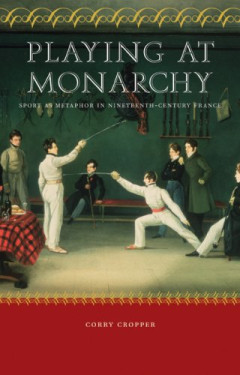
Playing at Monarchy: Sport as Metaphor in Nineteenth-Century France
For centuries sports have been used to mask or to uncover important social and political problems, and there is no better example of this than France during the nineteenth century, when it changed from monarchy to empire to republic. Prior to the French Revolution, sports and games were the exclusive domain of the nobility. The revolution, however, challenged the notion of noble privilege, and …
- Edisi
- -
- ISBN/ISSN
- 9780803217737
- Deskripsi Fisik
- -
- Judul Seri
- -
- No. Panggil
- -
 Karya Umum
  Filsafat
  Agama
Agama  Ilmu-ilmu Sosial
  Bahasa
  Ilmu-ilmu Murni
  Ilmu-ilmu Terapan
  Kesenian, Hiburan, dan Olahraga
  Kesusastraan
  Geografi dan Sejarah